


Intensive Driving Courses: Fast-Track to Test Success

Racing against the clock to secure your license can feel overwhelming when juggling work or job opportunities in East London. For those facing tight deadlines, condensed timeframe learning through an intensive driving course promises a faster route to the test by focusing on daily, concentrated lessons. This guide unpacks what makes these accelerated courses different from standard lessons, highlighting key formats, how they work, and the specific advantages they offer for learners needing speedy, effective results.
Key Takeaways
| Point | Details |
|---|---|
| Intensive Learning Approach | Intensive driving courses are designed for quick skill acquisition, typically completed in one to two weeks with daily lessons. |
| Flexible Course Formats | Various formats such as full immersion, weekend intensive, and semi-intensive courses cater to diverse learning styles and schedules. |
| Structured Learning Progression | Courses follow a systematic progression from theory to practical driving, with continuous feedback and personalized instruction. |
| Cost Considerations | Intensive courses can range significantly in cost, with potential hidden fees for tests and materials, requiring careful financial planning. |
What Are Intensive Driving Courses?
Intensive driving courses represent a concentrated and accelerated approach to learning how to drive, designed specifically for motivated learners who need to obtain their driving license quickly. Unlike traditional driving lessons spread out over several months, these courses compress learning into a condensed timeframe of one or two weeks.
Typically, an intensive driving course involves several key characteristics:
- Multiple hours of daily driving practice
- Consistent instruction from the same professional driving instructor
- Focus on real traffic conditions and standard test routes
- Tailored learning progression based on individual skill levels
The core philosophy behind these courses is rapid skill acquisition through concentrated learning and practice. By dedicating substantial consecutive days to driving instruction, learners can build muscle memory, confidence, and technical skills much faster than traditional part-time lessons.
Most intensive courses are structured to simulate actual driving test conditions, helping students become test-ready within a remarkably short period. Instructors typically customize the curriculum to match individual learning speeds and previous driving experience, ensuring personalized progression toward test readiness.
Pro tip: Schedule your intensive driving course during a period when you can fully commit your time and mental energy to learning, minimizing external distractions and maximizing your potential for success.
Types of Intensive Driving Course Formats
Intensive driving courses come in various formats designed to accommodate different learning styles, schedules, and individual needs. Understanding these formats can help learners choose the most suitable approach for their specific circumstances and goals.
Course Types include:
- Full Immersion Courses: 1-2 week programs with daily driving lessons
- Weekend Intensive Courses: Concentrated lessons spread across consecutive weekends
- Semi-Intensive Courses: Lessons scheduled 2-3 times per week over several weeks
- One-to-One Personalized Courses: Custom programs tailored to individual skill levels
The most comprehensive intensive courses typically blend theoretical instruction with practical driving experience. These programs aim to build comprehensive skills quickly by providing concentrated, structured learning environments that simulate real-world driving conditions.
Full immersion courses are particularly popular among learners with tight timelines or those needing to obtain their license quickly. These programs often involve 4-6 hours of daily instruction, allowing students to progress rapidly through driving skills and test preparation. Weekend intensive courses offer flexibility for those with weekday work or study commitments, compressing learning into concentrated weekend sessions.
Semi-intensive courses provide a balanced approach, allowing learners to integrate driving lessons with their existing schedules. These programs typically spread lessons across multiple weeks, giving students time to absorb and practice skills between sessions while maintaining consistent progression.
Pro tip: Select an intensive driving course format that aligns with your personal schedule, learning pace, and availability to maximize your chances of success.
How Intensive Courses Work Step-By-Step
Intensive driving courses are strategically designed to transform novice drivers into confident, skilled motorists through a structured and accelerated learning process. The comprehensive driving instruction follows a systematic approach that maximizes learning potential and minimizes time investment.
The typical intensive driving course progression includes several critical stages:
Initial Assessment
- Evaluate current driving knowledge and skill level
- Determine appropriate starting point for instruction
- Identify potential areas of strength and improvement
Foundational Theory
- Comprehensive classroom or online theoretical instruction
- Cover traffic rules, road safety, and essential driving principles
- Provide written and interactive learning materials
Practical Driving Instruction
- One-on-one training with professional driving instructor
- Progressive skill development from basic maneuvers to complex driving scenarios
- Continuous feedback and real-time performance correction
Each stage of the intensive course is carefully structured to build upon previous learning. Instructors typically use a incremental skill-building approach, starting with fundamental techniques like proper seat adjustment, mirror positioning, and basic vehicle control. As students progress, they advance to more complex skills such as navigating intersections, highway driving, and handling challenging road conditions.

The practical instruction phase involves extensive hands-on experience, with most intensive courses providing 4-6 hours of daily driving practice. This concentrated approach allows students to rapidly develop muscle memory, situational awareness, and confidence behind the wheel. Instructors carefully monitor progress, adapting instruction to each student's unique learning pace and addressing individual challenges in real-time.
Pro tip: Maintain a learning journal during your intensive driving course to track your progress, note areas for improvement, and reflect on your skill development.
Key Benefits for Busy Learner Drivers
Intensive driving courses offer a lifeline for busy individuals struggling to balance learning to drive with demanding personal and professional commitments. These specialized programs are specifically designed to accommodate the time constraints and learning needs of modern, schedule-packed learners.
Key advantages for busy drivers include:
- Accelerated Learning Timeline: Complete driving education in weeks instead of months
- Flexible Scheduling Options: Courses tailored to work around existing commitments
- Concentrated Skill Development: Maximum learning in minimum time
- Consistent Instructor Support: Continuous guidance from dedicated professionals
- Faster Path to Licensing: Rapid progression toward driving test readiness
The best driving lesson strategies recognize that time is a critical resource for modern learners. Intensive courses compress traditional multi-month learning experiences into concentrated programs that deliver comprehensive driving skills efficiently and effectively.
For professionals, students, and individuals with limited availability, these courses provide a strategic approach to obtaining a driving license. The structured curriculum ensures that every minute of instruction counts, focusing on practical skills, test preparation, and building genuine driving confidence. Instructors work closely with students to maximize learning potential, adapting teaching methods to individual learning styles and time constraints.
Most intensive courses offer remarkable flexibility, with options ranging from full-day immersion programs to weekend-focused instruction. This adaptability allows learners to choose a format that seamlessly integrates with their existing schedules, making professional driving instruction accessible to those with the most demanding time commitments.
Pro tip: Prioritize scheduling your intensive driving course during a period with minimal external stress and maximum personal availability to optimize your learning experience.
Comparing Intensive and Standard Lessons
Learning to drive requires careful consideration of instructional approaches, with intensive and standard lessons offering distinctly different pathways to obtaining a driving license. Traditional learning methods present unique advantages and challenges that potential drivers must carefully evaluate.
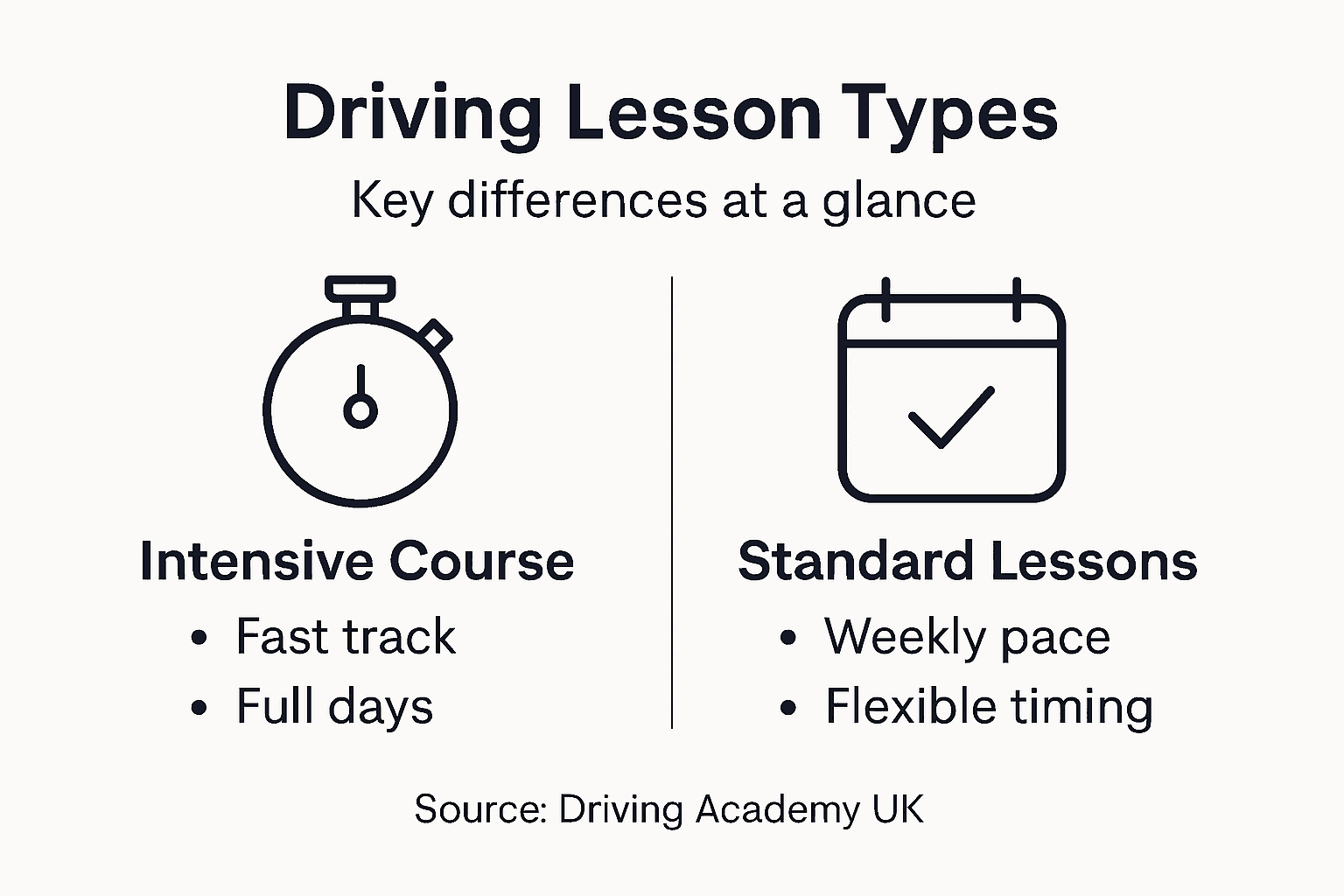
Key differences between intensive and standard driving lessons include:
Lesson Frequency
- Intensive: Daily or near-daily lessons
- Standard: Weekly or biweekly lessons
Total Learning Duration
- Intensive: 1-2 weeks
- Standard: 3-6 months
Learning Pace
- Intensive: Rapid skill acquisition
- Standard: Gradual knowledge building
Cost Structure
- Intensive: Upfront, concentrated investment
- Standard: Spread-out, incremental expenses
Standard driving lessons provide a more relaxed learning environment, allowing students time to absorb information between sessions and practice independently. This approach suits learners who prefer a slower, more deliberate progression and have flexible schedules that accommodate weekly instruction.
Intensive courses, by contrast, offer a concentrated learning experience designed for motivated individuals seeking rapid skill development. These programs compress multiple months of instruction into a few concentrated weeks, providing continuous practice and immediate feedback. While potentially overwhelming for some learners, intensive courses can be ideal for those with tight timelines or strong learning capabilities.
Here's a side-by-side comparison to help you decide which driving lesson format may suit you best:
| Factor | Intensive Courses | Standard Lessons |
|---|---|---|
| Ideal For | Fast learners, tight timelines | Those preferring gradual progress |
| Stress Level | High, due to compressed schedule | Lower, more relaxed pace |
| Knowledge Retention | Short-term intensity, rapid feedback | Long-term reinforcement, steady review |
| Rescheduling Ease | Difficult, as courses are tightly packed | Flexible, can easily adjust sessions |
| Cost Flexibility | Large upfront payment required | Pay-per-lesson spaced out |
Pro tip: Assess your personal learning style, time availability, and stress tolerance before selecting between intensive and standard driving lesson formats.
Costs, Test Booking, and Common Pitfalls
Navigating the financial and logistical landscape of intensive driving courses requires careful planning and strategic decision-making. Driving course costs and challenges vary significantly depending on multiple factors that learners must carefully evaluate.
Typical cost breakdown for intensive driving courses:
Basic Course Pricing
- One-day courses: Starting at £250
- Full 45-hour programs: Up to £2,000
- Metropolitan area premiums: Additional 15-25%
Additional Expenses
- Test booking fees
- Vehicle rental
- Insurance supplements
- Learning materials
Common financial and logistical pitfalls in intensive driving programs include significant upfront investments and potential scheduling complexities. Learners must carefully assess their personal readiness, financial capacity, and time availability before committing to an accelerated learning approach.
Test booking requires strategic planning, with most intensive courses including test preparation and potential examination fees. Learners should confirm exact inclusions, understand cancellation policies, and budget for potential retakes. The concentrated nature of these courses means learners must maintain peak performance and mental preparedness throughout the program.
This summary outlines key upfront and hidden costs to consider for intensive driving courses:
| Cost Type | Typical Range | Additional Notes |
|---|---|---|
| Course Tuition | £250 - £2,000 | Varies by duration and location |
| Test Booking Fees | £62 - £75 per test | Theory and practical tests separate |
| Vehicle/Insurance | £20 - £50 daily | Check if included or extra |
| Learning Materials | £10 - £50 | Study apps, books, or handouts |
Successful navigation of intensive driving courses demands careful financial planning, realistic self-assessment, and a commitment to continuous learning.
Pro tip: Request a comprehensive breakdown of all potential costs and included services before enrolling in an intensive driving course to avoid unexpected financial surprises.
Fast-Track Your Driving Test Success with London Driving Academy
If you are eager to overcome the challenges of a tight schedule and want to rapidly gain the skills needed to pass your driving test, intensive driving courses are your answer. The article highlights key concerns like accelerated learning, maintaining focus during condensed lessons, and managing costs while aiming for fast results. London Driving Academy specializes in providing tailored intensive driving courses designed to fit your personal pace and availability while ensuring consistent instructor support and practical test preparation.
Take control of your driving journey today with our highly rated instructors and flexible packages that make accelerated learning accessible and affordable. Don't wait for months to get on the road. Visit London Driving Academy now to explore our comprehensive offerings including intensive driving courses and convenient online booking. Act now to secure your spot and start your fast-track toward confident driving and test success.
Frequently Asked Questions
What are intensive driving courses?
Intensive driving courses are accelerated programs designed to teach learners how to drive in a short period, typically within one to two weeks. They focus on concentrated instruction with multiple hours of practice each day.
How do intensive driving courses differ from standard lessons?
Intensive courses offer daily lessons over a condensed timeline, usually completing the learning process in weeks, while standard lessons are spread out over several months with less frequent meetings.
What are the primary benefits of taking an intensive driving course?
The main benefits include an accelerated timeline for obtaining a license, flexible scheduling options, concentrated skill development, consistent support from instructors, and a faster path to test readiness.
What should I consider when choosing an intensive driving course?
When selecting a course, consider the format that best suits your schedule and learning style, the total costs involved (including potential extra fees), and your personal availability to fully commit to the program.
